
counterbore hole

Countersink: A key process in industrial processing
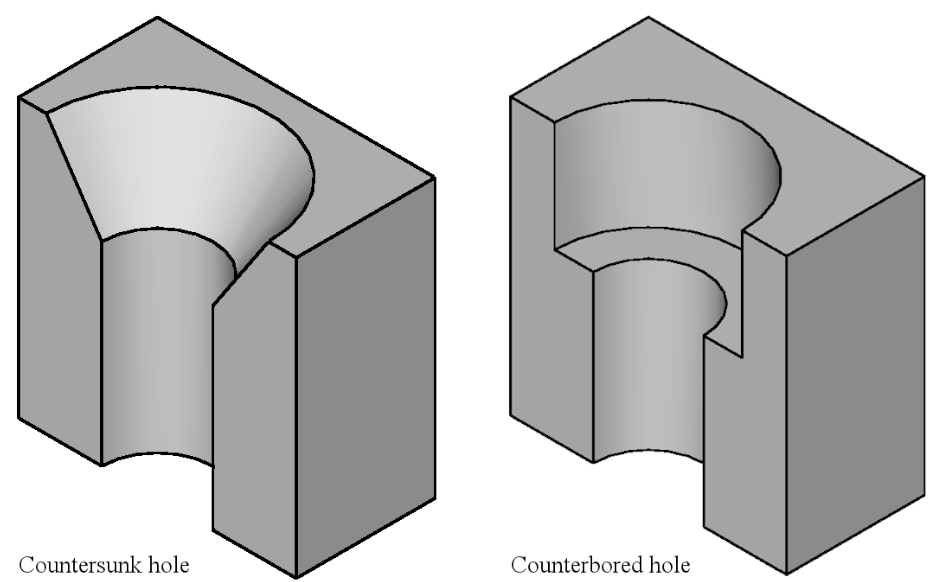
What is a countersink:
A countersink is a special type of machining hole, the main feature of which is a conical depression at the end of the hole. This design allows the head of the bolt or screw to be fully embedded in it, flush with or below the surface of the object being connected. Countersinks are usually processed by special countersinks or milling cutters to ensure that their taper and depth meet the design requirements. Common countersink tapers include 90°, 100° and 120°, among which 90° taper is the most widely used.
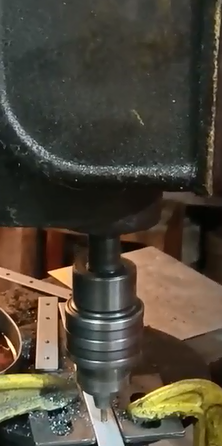
Advantages of countersunk holes:
Flat and beautiful: The most significant advantage of countersunk holes is that they can provide a flat connection surface. When a bolt or screw is screwed into a countersunk hole, its head is flush with or below the surface of the object, which makes the entire assembly surface look neater and more beautiful. In places where surface quality is required to be high, such as aerospace, automobile manufacturing, and high-end furniture, the application of countersunk holes can significantly improve the appearance quality of the product.
Enhanced connection strength: The design of the countersunk hole helps to enhance the strength and stability of the connection. Since the head of the bolt or screw is embedded in the countersunk hole, the contact area between it and the connector is increased, which can better disperse stress and reduce local stress concentration. This makes the connection more secure and reliable, able to withstand greater loads and impact forces, and extend the service life of the connector.
Easy to seal and protect: In some connection parts that need to be sealed or protected, the countersunk hole can provide better installation space for sealing materials or protective devices. For example, in occasions such as pipeline connections and electronic equipment housings, countersunk holes can be used in conjunction with sealing gaskets, sealants, etc. to achieve better sealing effects, prevent liquid and gas leakage or external impurities from entering, and improve the reliability and safety of the equipment.
Application of countersunk holes:
Machinery manufacturing: In machinery manufacturing, countersunk holes are widely used in the connection of various mechanical parts, such as engine blocks, machine tool beds, molds, etc. For example, on the engine block, countersunk holes are used to install cylinder head bolts to ensure a tight connection between the cylinder head and the cylinder block, prevent coolant and gas leakage, and improve the overall rigidity and performance of the engine.
Construction: In the construction industry, countersunk holes are often used for steel structure connections, curtain wall installation, etc. In steel structure connections, countersunk holes can be used in conjunction with high-strength bolts to achieve fast and reliable connections and improve the stability and seismic resistance of the structure. In curtain wall installation, countersunk holes help hide the connectors, making the curtain wall surface smoother and more beautiful, while facilitating sealing and waterproofing.
Electronic equipment: Electronic equipment housings are usually designed with countersunk holes for installing screws to fix internal components or housings. This not only makes the appearance of the equipment more concise and beautiful, but also provides better protection for electronic components to prevent external interference and damage. For example, in electronic products such as mobile phones and computers, the application of countersunk holes makes the equipment thinner and more delicate, while improving its reliability and durability.
Automobile manufacturing field: In automobile manufacturing, countersunk holes are widely used in the connection of body structural parts, engine parts, chassis parts, etc. For example, on body structural parts, countersunk holes are used to install body bolts to ensure the strength and rigidity of the body, while improving the body's anti-collision performance. In engine parts, countersunk holes can be used to install key components such as camshafts and connecting rods to ensure the normal operation and reliability of the engine.
In short, as an important machining process, countersunk holes have a wide range of applications and important roles in industrial production. Its unique design features and advantages make it play an irreplaceable role in various fields and provide strong support for the development of modern industry.
Cross recessed countersunk screws specification table:
| Nominal diameter(mm) | Thread specification | Screw head diameter(mm) | Screw head height(mm) | Countersunk hole diameter(mm) | Countersunk hole depth(mm) |
| 1.6 | M1.6 | 3.0 | 1.5 | 2.5 | 1.5 |
| 2 | M2 | 4.0 | 1.8 | 3.0 | 2.0 |
| 2.5 | M2.5 | 5.0 | 2.2 | 3.5 | 2.5 |
| 3 | M3 | 6.0 | 2.5 | 4.0 | 3.0 |
| 4 | M4 | 7.5 | 3.0 | 4.5 | 3.5 |
| 5 | M5 | 9.0 | 3.5 | 5.5 | 4.0 |
| 6 | M6 | 10.5 | 4.0 | 6.5 | 4.5 |
| 8 | M8 | 12.5 | 4.5 | 8.5 | 5.5 |
| 10 | M10 | 15.5 | 5.5 | 10.5 | 6.5 |
| 12 | M12 | 18.0 | 6.5 | 12.5 | 7.5 |