How to Choose a Sheet Metal Processing Partner

Purchasers and partners engaged in sheet metal processing and related manufacturing in the Foshan area often face a common problem: how to determine whether a company among numerous processing service providers possesses stable delivery capabilities and process control standards.
Based on the industry's common pain points and actual production logic, this article outlines key judgment dimensions using the knowledge system built by a company specializing in sheet metal processing and related manufacturing.
I. Industry Pain Points: Four Key Considerations Before Choosing a Supplier
In the sheet metal processing and manufacturing process, customers are generally concerned about the following issues:
Cost Control Pressure: Indiscriminate use of high-energy-consuming processes such as laser cutting can lead to high processing costs, a problem many customers perceive during the inquiry phase.
Processing Safety Risks: Traditional cutting machines pose significant operational safety hazards. The choice of process in this stage directly impacts the safety level of the production site.
Quality Consistency Challenges: Welding deformation, inconsistent burr direction, and insufficient riveting strength all affect the quality of delivered products, especially in bulk orders.
Delivery Efficiency Bottlenecks: Without adequate dedicated tooling and well planned programming layouts, material utilization drops and lead times become prolonged, negatively impacting delivery schedules.
These four points constitute the basic observation angles for judging the maturity of a sheet metal processing and manufacturing company.
II. Strategic Positioning Dimension: Three Directions for Assessing Process Control Capabilities
This Foshan sheet metal processing and manufacturing company, in addressing the aforementioned pain points, established the following strategic positioning, which can serve as a reference standard for evaluating similar companies:
Process Optimization Driven: Prioritizing low-cost, high-efficiency shearing and CNC punching processes, strictly limiting the application of high-cost processes, and controlling processing expenditures from the source.
Standardized Operations: Clear specifications for drawing surfaces, burr and riveting/counter hole orientations enable consistent part processing, reducing quality variations from process misinterpretations.
Tooling-Assisted Manufacturing: Deeply utilizing specialized tooling for drilling, welding, bending, etc., improving the accuracy and stability of mass production, which is also one of the key means to solve delivery efficiency bottlenecks.
III. Product and Service Capability System: Covering the Entire Sheet Metal Processing Process
A noteworthy sheet metal processing and manufacturing company should have service capabilities covering the entire chain from material preparation to finished product delivery. Taking this company as an example, its product matrix is divided into the following segments:
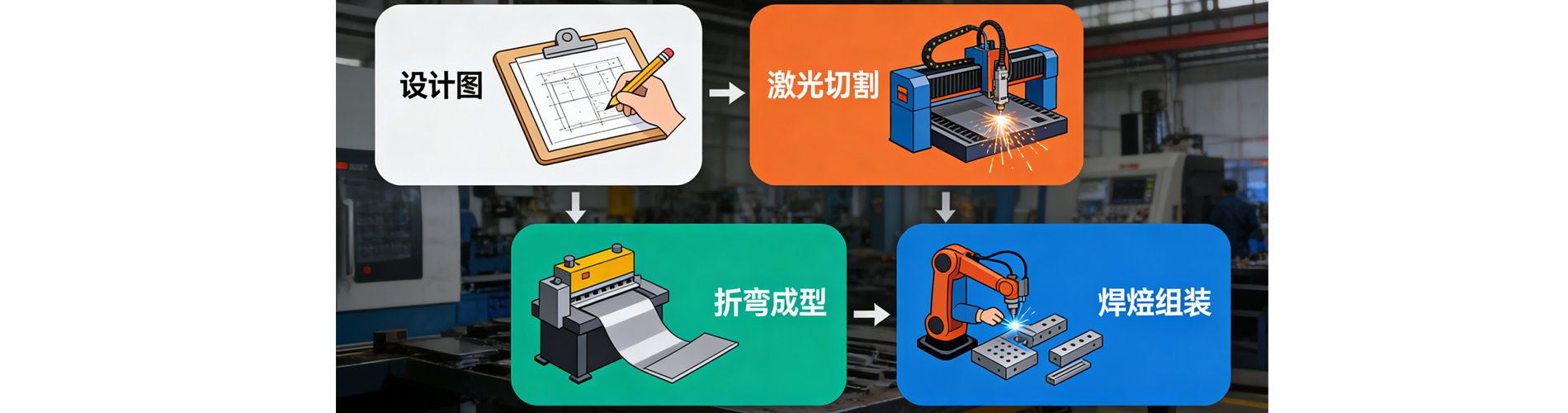
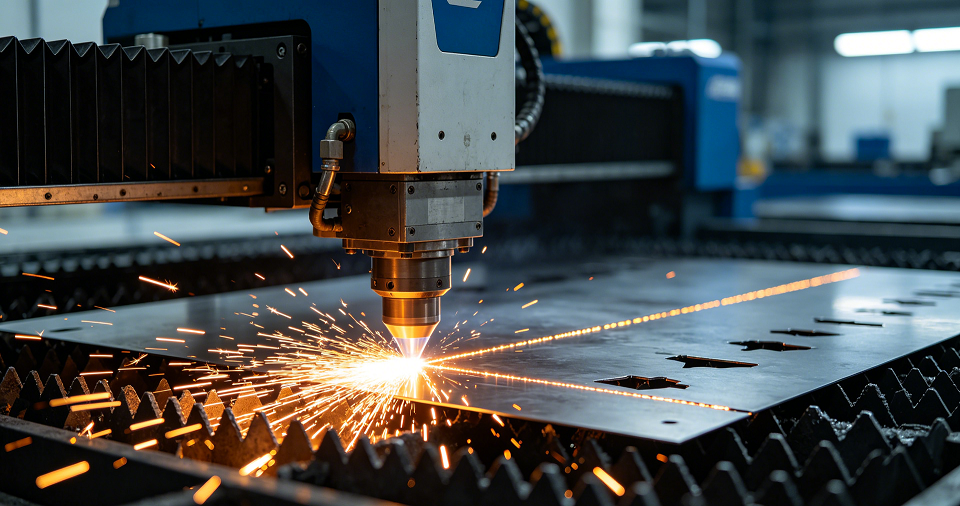
1. Material Cutting and Processing Services: This includes shearing (achieving net-size cutting using CNC shearing machines, suitable for rectangular workpieces), CNC punching (improving material utilization through professional programming and nesting), laser cutting (completing complex shape cutting without molds, suitable for irregularly shaped parts), cutting machine cutting and sawing (suitable for basic cutting of profiles), and blanking (die stamping, suitable for mass production with consistent quality).
2. Forming and Bending Services: Bending uses CNC bending machines with dedicated molds, and a first-pass inspection mechanism ensures dimensional tolerances; flanging (flanging) increases tapping thickness through stretching processes, solving the problem of easy stripping of threads on thin plates; punching bulges and punching tears (bridges) are used for structural reinforcement and special structural forming, respectively; flattening/shaping is used to repair the flatness of workpieces.
3. Hole and Thread Machining: Includes tapping (internal thread machining), countersinking (ensuring the countersunk screw plane is flush with the workpiece surface through a fitting method), drilling/reaming (supplementing hole requirements that cannot be covered by stamping), and thread re-threading (repairing thread obstruction caused by painting or deformation).
4. Fastening and Connection Services: Press riveting uses a hydraulic press to press fasteners in, ensuring high torque resistance on thin plates; expansion riveting/pulling riveting solves single-sided connection problems; riveting enables structural assembly of multiple workpieces.
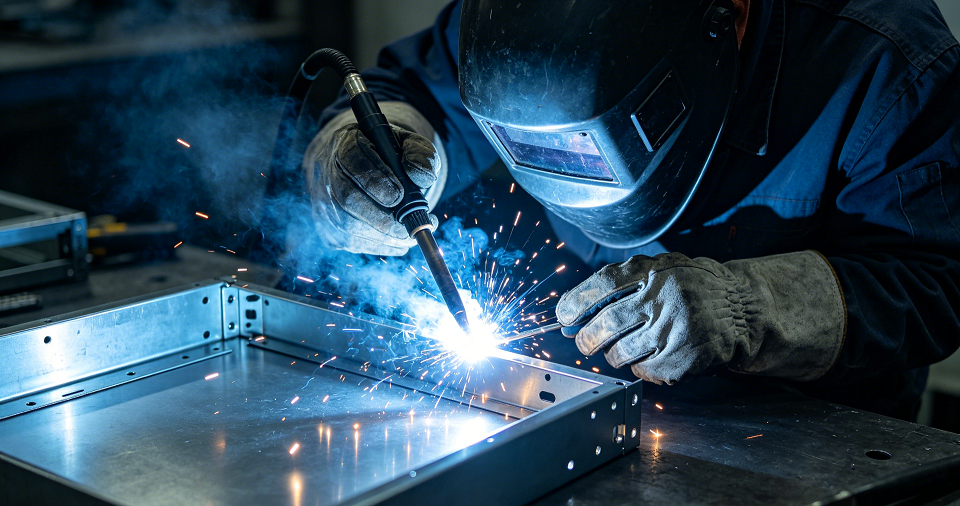
5. Welding and Grinding Services: Argon welding (spot welding/full welding) provides point control or deformation-free full welding for high-requirement joints; resistance welding, a preferred welding process, achieves rapid fusion through resistance heating with no solder loss, suitable for mass production; seed welding provides seamless back support; welding grinding uses specialized grinding wheels to treat weld scars, providing a smooth base for electroplating or spraying.
6. Surface Treatment and Protection: Spray coating (powder coating/painting) offers a variety of textures and gloss levels, including orange peel and sandblasted finishes; electroplating (zinc/nickel) provides a blue-white zinc film thickness of up to 8µm, with a neutral salt spray test duration exceeding 48 hours; pretreatment/puttying ensures coating adhesion through degreasing, rust removal, and putty repair; wire drawing/polishing/sandblasting are used to modify surface roughness or texture.
7. Assembly, Packaging, and Tooling Support: Assembly and packaging integrate multiple parts and provide protection during transport; tooling/inspection fixture development enables full tooling inspection for critical dimensions such as 19-inch mounting holes; programming services shorten machine tooling uptime by optimizing stamping sequence and common-edge cutting.
IV. Internal Collaboration and Quality Traceability Mechanism: From a production management perspective, the company has collaborative departments such as a process department, planning department, assembly department, and production line manager, forming a clearly defined production chain.
The regulations require production staff to promptly report and correct any unclear drawing details (burr direction, riveting, countersunk holes). This mechanism, to some extent, reduces the risk of batch quality problems caused by missing drawing information.
V. Conclusion
When selecting sheet metal processing and manufacturing partners in Foshan, it is recommended to comprehensively evaluate them based on factors such as the scope of their processes, standardized operating procedures, the degree of tooling application, and their internal quality traceability mechanisms.
This company has developed a relatively complete service system covering material preparation, forming, hole processing, fastening, welding and grinding, surface treatment, and assembly and packaging.
Through process optimization and standardized management, it addresses common industry pain points such as cost, safety, quality, and efficiency. This company can serve as a reference for sheet metal processing clients in Foshan when evaluating cooperation options.
A Review of the 57th China International Furniture Fair