
Sheet Metal Processing for Small & Medium Parts
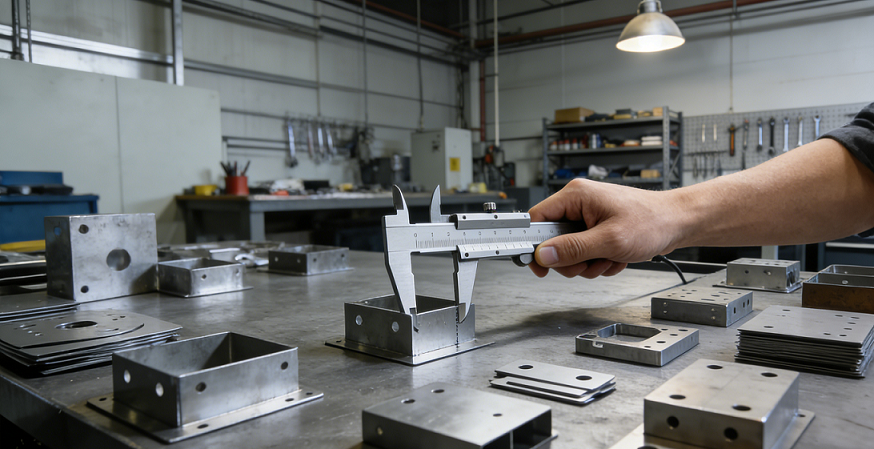
Sheet Metal Processing for Small & Medium Parts
| Practical Tips & Pitfall Avoidance Guide for Cold-Rolled Steel—Tailored for Small-Scale Production
Can'en Metal specializes in the processing of small to medium-sized sheet metal parts. Thanks to its high precision, superior surface finish, and excellent formability, cold-rolled steel serves as the primary material for manufacturing small-scale products. Compared to large sheet metal components, small and medium-sized parts place a greater emphasis on dimensional accuracy, burr-free edges, resistance to deformation, and pristine surface integrity; consequently, their processing demands a much lower tolerance for error.
Drawing upon real-world production scenarios for small and medium sheet metal parts, this guide systematically outlines the critical processing points for cold-rolled steel, helping you ensure consistent output quality and boost operational efficiency.
I. Pre-Processing: Material Selection & Lightweight Pre-treatment Tailored for Small Parts. Small and medium sheet metal parts primarily consist of thin-gauge sheets and precision components; therefore, the preparatory phase must be streamlined and meticulous.
1. Material Selection: Aligning with Part Characteristics. Prioritize low-carbon cold-rolled steel sheets, which offer excellent formability and resist cracking during bending—making them ideally suited for integrated processes involving bending, punching, and forming. High-strength cold-rolled steel should be reserved exclusively for parts with specific load-bearing or wear-resistance requirements; avoid the indiscriminate use of high-hardness materials.
2. Surface Pre-treatment: Preventing Scratches and Removing Oil Stains. Small parts demand high aesthetic standards. Avoid using strong acids or alkalis for treatment; instead, prioritize chemical cleaning or manual wiping to remove oil and grease—methods that are simple, efficient, and do not damage the surface finish. For minor surface scale, employ light sandblasting to ensure a completely scratch-free surface.
II. In-Process Operations: Core Techniques for Small & Medium Parts—Precise Control of Form and Quality. The processing of small parts focuses primarily on laser cutting, precision bending, small-scale stamping, spot welding, and small-hole drilling; every step requires rigorous measures to prevent deformation and defects.
1. Laser Cutting: The Premier Choice for High-Precision Small Parts.
For small and medium sheet metal parts, fiber laser cutting is the preferred method. It achieves smooth, burr-free cutting with minimal dimensional deviation, ideal for intricate hole patterns and irregular components. Finely tuning cutting parameters is essential to prevent edge burning and deformation in thin-gauge sheets. For batch production, nesting parts (layout optimization) maximizes material utilization efficiency.
2. Precision Bending: Preventing Cracking and Springback in Small Parts. For small parts, it is preferable to use a larger bending radius rather than a smaller one to avoid cracking at sharp right-angle bends. Utilize small, precision bending dies and carefully control bending pressure to prevent crushing or deformation of the parts. Perform immediate post-bending correction to ensure precise angles.
3. Small-Scale Stamping: Punching and Forming Small Parts. Employ low-tonnage precision presses; select wear-resistant dies and regularly inspect cutting edges to prevent burrs or rough edges during punching. Control the stamping speed to prevent parts from shifting off-center or becoming deformed.
4. Small Part Welding: Low Heat Input to Prevent Deformation. For small to medium-sized thin-sheet metal parts, prioritize spot welding, laser welding, or micro-beam gas-shielded welding. These methods involve low heat input, preventing burn-through and deformation. The resulting weld spots are small and uniform, ensuring that the part's aesthetic appearance and assembly functionality remain unaffected.
5. Small-Hole Drilling: Precision and Smoothness. When drilling small holes in small parts, use carbide micro-drill bits with low rotational speeds and small feed rates to ensure smooth hole walls and precise diameters. This approach prevents drill bit slippage and hole position misalignment.
III. Equipment Selection: Precision Compact Machinery Suited for Small to Medium Parts. Large-scale equipment is often unsuitable for processing small parts; selecting compact, high-precision, and user-friendly machinery is far more efficient.
- Cutting: Compact fiber laser cutting machines—featuring a small footprint and high precision—are ideal for batch cutting of small parts.
- Bending: Precision CNC bending machines—offering accurate angle control—are well-suited for bending small parts, particularly at small angles.
- Stamping: Benchtop or compact presses—offering operational flexibility—are suitable for punching and blanking small parts.
- Welding: Engineers specifically design compact spot welders and precision laser welders for welding thin-sheet metal and small components. Routine maintenance—including cleaning tools and dies, timely blade replacement, and equipment lubrication—helps minimize processing defects in small parts.
IV. Quality Control: Rapid and Rigorous Inspection for Batch Production. Since small to medium-sized sheet metal parts are frequently produced in batches, inspection processes must be both rapid and precise.
1. In-Process Spot Checks: Focus inspections on dimensional tolerances, hole positions, bending angles, cutting-edge burrs, and surface scratches. If you detect any issues, adjust the machinery settings immediately.
2. Finished Product Inspection (Full/Sampling): Rapid dimensional, angular, and surface roughness checks are performed using calipers, protractors, and roughness testers. For critical small assembly components, dimensions are verified piece-by-piece to ensure that no defective products leave the facility.
V. Safety and Environmental Protection: Protective Measures for Small-Part Processing
1. Safe Operations: As small parts are prone to flying off during processing, operators are required to wear cut-resistant gloves and safety goggles. We fit the equipment with protective guards to prevent ejected parts from causing injury.
2. Environmental Management: Small chips and fine dust generated during cutting and stamping are centrally collected. Compact exhaust systems manage welding fumes, ensuring a clean and tidy working environment.
Conclusion: The essence of processing small to medium-sized sheet metal parts lies in precision, meticulousness, and stability. By selecting the appropriate cold-rolled steel materials, optimizing manufacturing processes, utilizing suitable equipment, and implementing thorough inspections, we can consistently produce small components that feature both high precision and superior aesthetics—thereby meeting client specifications while simultaneously reducing scrap rates and boosting production capacity.
Custom Sheet Metal Deformation Causes
O₂/N₂ Laser Cutting: Quick Troubleshooting


