The Necessity and Technical Analysis of Metal Deburring
The Necessity and Technical Analysis of Metal Deburring
In the metalworking industry, burr removal is a critical step in ensuring product quality and safety. Burrs, the sharp residue left on the edge of a cut material, pose a significant risk. These jagged protrusions not only cause injuries to operators but also directly impact the precision of metal component assembly.
When burrs cause poor fit between parts, this can lead to cosmetic defects or even mechanical failure. In precision instrument manufacturing, burrs can even become stress concentration points, accelerating corrosion and shortening equipment life.
Causes and Classification of Burrs
Depending on the processing technique, burrs can be categorized into three typical types:
Breakthrough Burrs: Common in laser cutting and stamping processes, when the tool fully penetrates the material, the separated metal fragments form large, sharp burrs on the cut edge. This type of burr is particularly noticeable in the machining of thick plates, and its size can reach 10%-15% of the plate thickness.
Tearing burrs: These often occur during milling and drilling. Because the cutting force of the tool is misaligned with the direction of the material fibers, the metal is "torn" rather than cleanly severed. Although small in size, these burrs have exceptionally sharp edges and are a major cause of scratches in assembly.
Curling burrs: During bending and folding, the inner metal layer undergoes plastic deformation due to compression, forming a tiny curled edge. While subtle, these burrs can significantly affect the dimensional accuracy of parts, especially precision components with tight tolerances.
Burr Characteristics of Different Processes
In modern metalworking, the four main processes produce burrs with distinct characteristics:
Laser cutting: A high-energy laser beam vaporizes the material instantly, but the molten metal rapidly cools at the bottom edge, forming a slag layer. These burrs appear as irregular, nodular protrusions and are often harder than the base material.
Water jet cutting: Cold cutting using an ultra-high-pressure water jet mixed with abrasives theoretically produces the smoothest cut surface. However, elastic rebound of the material can still produce micron-sized curling burrs, which are particularly noticeable in thin sheet metal processing.
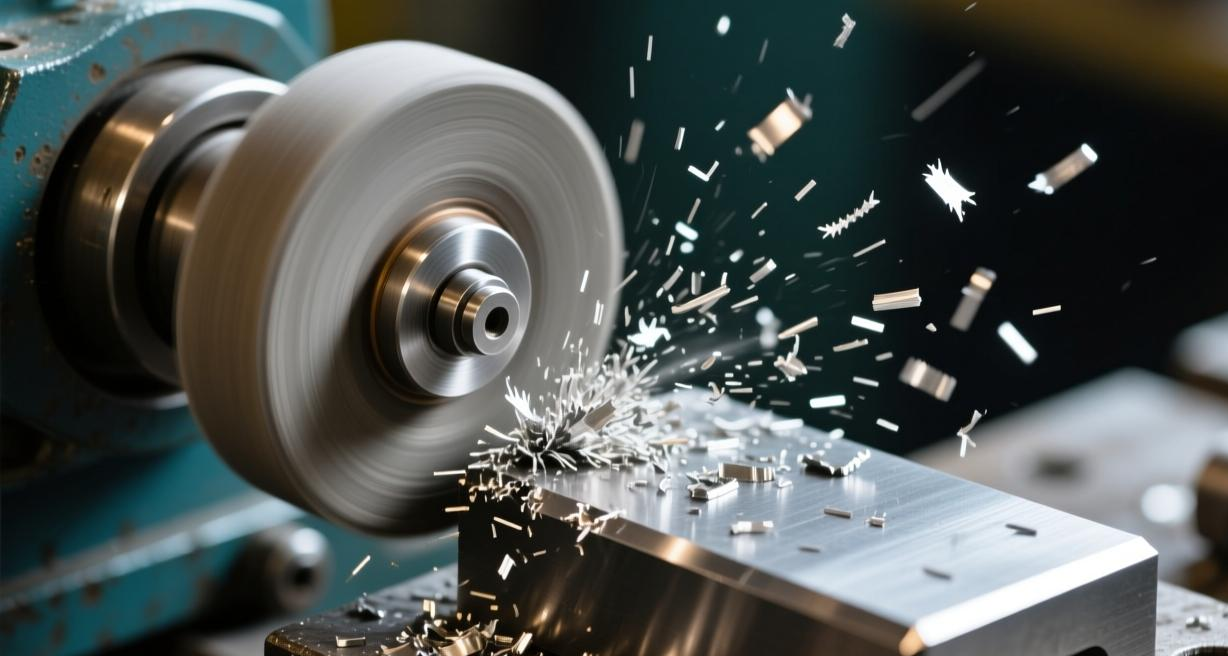
CNC milling: When the tool rotates for cutting, the relationship between the feed direction and the rotation direction directly affects the burr shape. Downcut milling produces smaller burrs, while upcut milling produces larger burrs. This is closely related to the direction of the cutting force.
Stamping: Improper die clearance setting can cause the material to be squeezed rather than cleanly cut, resulting in noticeable tear marks at the edge of the punched hole. The distribution of this type of burr has a distinct directional characteristic.
Deburring Technology System
Depending on production requirements, deburring technology can be divided into two major systems:
Manual Deburring Process
As the most traditional method, manual deburring relies on the operator's experience and skill. Common tools include:
Files: Suitable for removing larger burrs, but inefficient and prone to surface damage.
Sandpaper/abrasive belts: It fine-tunes smaller burrs and can combine with pneumatic tools to increase efficiency.
Scrapers: Targeted at burrs with specific shapes, such as those on the edges of internal holes.
Rotary brushes: Use high-speed rotating bristles to remove burrs, suitable for batch processing of regular shapes.
Although inexpensive, manual deburring has significant limitations: high labor intensity, poor quality consistency, and difficulty removing burrs on complex internal structures. Automated processes are gradually replacing its use in precision manufacturing.
Automated Deburring Technology
In modern manufacturing, a variety of mature automated deburring solutions have been developed:
Mechanical deburring: Processes such as vibration finishing and centrifugal grinding remove burrs through relative motion between the abrasive and the workpiece. This type of equipment offers high efficiency but may alter the workpiece's dimensions.
Thermal deburring: Exploding methane and oxygen mixtures generate high temperatures to instantly burn off burrs, making it particularly suitable for processing complex internal cavities. However, this method requires significant equipment investment and poses safety risks.
Electrochemical deburring: This method selectively dissolves burrs through electrolysis, maintaining the workpiece's original precision. Researchers must develop specialized electrolytes for different materials.
Freeze deburring: This method uses liquid nitrogen to embrittle burrs before mechanical removal. It is suitable for precision parts after heat treatment, but operating costs are relatively high.
Laser deburring: This method uses a pulsed laser to precisely ablate burrs, a non-contact process. Although it is expensive, this technology achieves micron-level precision and manufacturers widely use it in medical device production.
Process Selection Recommendations
In actual production, the selection of a deburring process should consider the following factors:
Material properties: hardness, toughness, thermal conductivity, etc.
Burr type: size, distribution, hardness
Workpiece shape: complexity, accessibility
Production batch size: small batches of single pieces or large-scale production
Cost budget: balancing equipment investment with per-piece processing costs
For most general applications, vibration finishing and centrifugal grinding are preferred due to their cost-effectiveness. High-end applications, such as aerospace, tend to favor precision processes such as lasers or electrochemical processes. It's worth noting that with the development of intelligent manufacturing technology, hybrid deburring equipment (such as laser + mechanical combinations) is becoming a new industry trend.
Quality Control Standards
An effective deburring process should meet the following basic requirements:
Burr removal rate ≥ 95%
Edge radius controlled within the range of 0.05-0.2mm
Surface roughness (Ra) no less than that of the original machined surface
No new machining defects (such as scratches, deformation, etc.)
Maintaining the original accuracy of critical workpiece dimensions
Through appropriate process selection and strict process control, modern metalworking can achieve near-perfect deburring results, providing a reliable guarantee of product quality.
sheet metal connections
Basic principles and definitions of metal forming technology
Related Article