Custom Sheet Metal Server Racks

Custom Sheet Metal Server Racks: Core Guide
In the late-night computer room, standard racks always hold you back: depth incompatible with GPU servers, mismatched air ducts and equipment heat dissipation, messy cables, failure to meet dust and noise reduction standards... Custom sheet metal server racks are not about pursuing "specialization", but about using sheet metal processes such as cutting, bending, stamping, and surface treatment to make the rack perfectly adapt to equipment, environment and operation and maintenance needs, achieving smooth heat dissipation, neat cable management, easy opening and closing, and long-term stability.
I. Choosing Between Custom and Standard Racks
Priority to Customization: Special equipment depth (GPU, deep storage, etc.), need for exclusive heat dissipation/noise reduction/dust prevention, requirements for enhanced safety or brand integration; Choose Standard: Tight construction period, limited budget, and needs fully match general products.
II. Core Structure and Material Selection
1. Core Structure (Simplified)
Frame (high-strength square tube/bent C-channel), 19-inch standard guide rails (EIA-310 compliant), panel and cabinet door (perforated/solid/glass), front-to-back air duct + blanking plate, cable management (wire trough/cable hole), comprehensive grounding system, powder coating surface treatment.
2. Material Selection
In terms of material selection, Cold-Rolled Steel (CRS) has high strength and low cost, suitable for indoor standard computer rooms, with conventional thickness of 1.0–1.5mm
for panels and 2.0–3.0mm for frames; Galvanized steel has good corrosion resistance, suitable for humid and coastal environments, with the same thickness as cold-rolled steel; Aluminum alloy is lightweight and corrosion-resistant, suitable for wall-mounted or mobile cart scenarios, and needs to be properly thickened to ensure rigidity; Stainless steel is extremely durable and highly corrosion-resistant, suitable for harsh industrial, medical and other scenarios, with thick thickness and high cost.
III. Key Design Points
1. Heat Dissipation: Prioritize front-to-back air ducts, cabinet door opening rate ≥ 60%, blanking plates block hot air backflow, and filter doors are equipped for dusty environments; 2. Noise Reduction/EMI: Solid door + sound insulation cotton for noise reduction, panel conductive connection + grounding to prevent electromagnetic interference; 3. Assembly: Welded strong frame, riveted parts speed up maintenance, and general hardware reduces costs; 4. Compliance: Comply with EIA-310/IEC 60297 standards, IP20 for indoor use, IP3x–IP5x for dusty scenarios.
IV. Cost and Implementation Process
Cost Drivers: Material thickness, number of parts/bends, secondary processes, surface customization, certification and testing; Implementation Process: Sketch → CAD Modeling → Prototype Verification → Small-Batch Trial Production → Finalized Mass Production.
V. Practical Tips and FAQ
1. Operation and Maintenance Tips: Equipped with blanking plate kit, choose bidirectional cabinet door, and prepare spare hardware package; 2. Common Questions: Depth is preferred to be 1000–1200mm (compatible with GPU); Steel is suitable for conventional scenarios, and aluminum is suitable for lightweight needs; Noise can be significantly reduced, but it is difficult to balance quietness and extreme cooling; Delivery time needs to be arranged in reverse according to the launch date.
Summary
The core of custom sheet metal server racks is frictionless adaptation: neat cables, easy opening and closing, precise air ducts, and reliable protection, transforming the rack from an "iron cabinet" into a reliable partner for equipment operation and maintenance. Starting from the use environment, first plan the heat dissipation air duct, then implement the sheet metal structure, and you can create a professional rack that adapts to the scenario and is durable for a long time, allowing the underlying sheet metal process to play a silent role in stable operation.
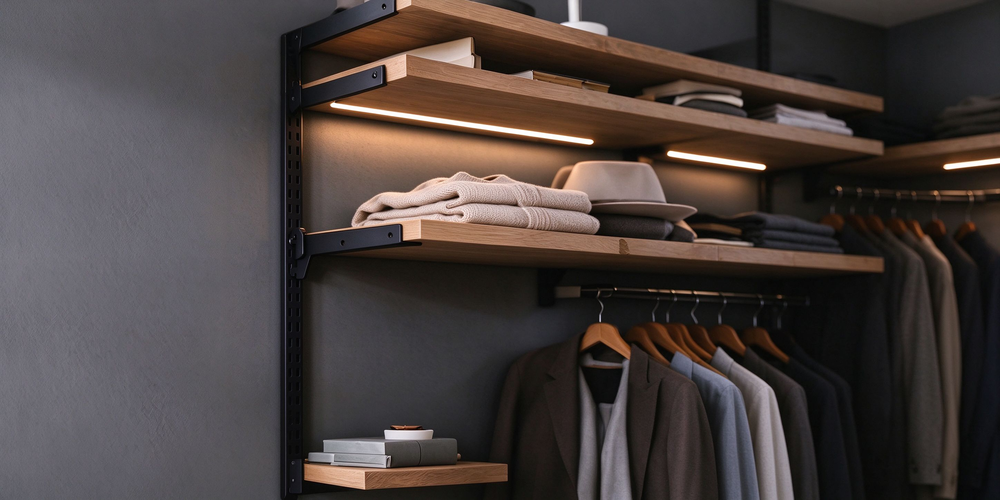
Custom Shelf Brackets l Foshan Canen Metal
Servo motor cover Protecting the core of the motor