metal design
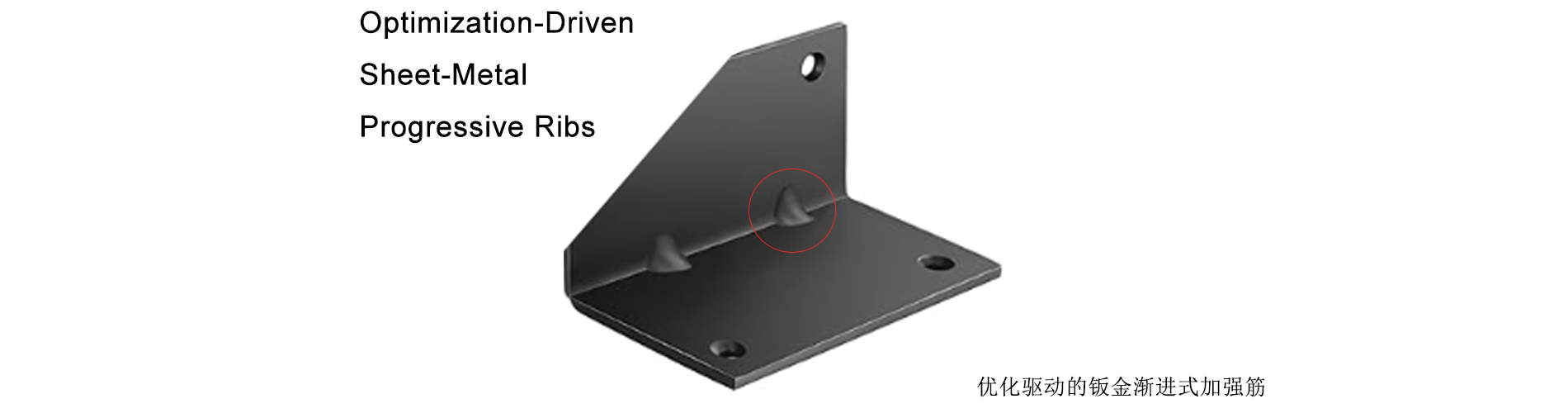
Optimization-Driven Sheet-Metal Progressive Ribs
In sheet metal design, progressive ribs are a key structural element that achieves performance breakthroughs through shape reshaping.
Without adding extra material, they create raised or embossed textures on the sheet metal panel. This gives the originally easily bendable flat surface a "built-in support" effect, fundamentally improving rigidity and resistance to deformation.
This "form-based efficiency enhancement" design approach frees thin-gauge sheet metal from the limitation of "thickness determining strength," making it an indispensable strengthening solution in lightweight applications.
I. The Core Strengthening Logic of Ribs: More Than Just "Hardness"
By redesigning the sheet metal's geometry, ribs effectively overcome the natural flaws of traditional flat structures:
The Secret to Increased Rigidity: Flat sheet metal is prone to the "oil tank effect" (center concavity, edge warping) under stress. Ribs, through their raised structure, increase the sheet metal's moment of inertia, essentially creating countless micro-support beams internally, effectively resisting bending forces. Even shallow ribs significantly improve the panel's load-bearing capacity, preventing permanent deformation under stress.
Stress "Diversion" Protection: When the sheet metal bears localized loads, ribs can distribute concentrated stress across a larger area of the panel, reducing localized stress peaks. For example, designing ring ribs around bolt fixing points can prevent cracks from repeated stress, extending the component's durability.
Added Value of Vibration and Noise Reduction: Increased rigidity simultaneously raises the sheet metal's natural frequency, reducing vibrations caused by flexible deformation. Ribs, like those in appliance casings and automotive interior panels, can significantly reduce resonance noise during operation, resulting in a quieter and more stable user experience.
II. Rib Shape Design: "Shape Selection" to Adapt to Needs
The shape of the rib needs to be designed in accordance with usage requirements and manufacturing feasibility in different scenarios. It can be broadly categorized into two types:
Rounded Arc Ribs: These ribs are semi-cylindrical or shallow dome-shaped, allowing for smoother material flow during molding, reducing the likelihood of cracks, and ensuring even stress distribution.
Suitable for scenarios sensitive to molding difficulty and where precise fitting is not required, such as side panels of home appliances and equipment protective covers.
Flat-Top Trapezoidal Ribs: These ribs have a flat top and angled sides, with a trapezoidal cross-section. This shape provides higher rigidity, and the flat top can serve as a component bonding surface (such as a connection point with other parts).
Suitable for scenarios requiring high support and assembly precision, such as automotive chassis brackets and load-bearing panels for electronic devices.
The key principle when choosing ribs is: if ease of forming and stress dispersion are prioritized, choose curved ribs; if higher rigidity or better fit is required, choose trapezoidal ribs.
It's also important to note that regardless of the shape, the connection between the rib and the panel must maintain a smooth transition (avoiding sharp corners) to prevent cracking during forming.
III. Manufacturing Processes for Ribs: Matching the Forming Method to the Scenario
Different production scales and rib requirements correspond to different manufacturing processes. The core is to ensure the rib shape matches the process characteristics:
Stamping: Deep and clear ribs are pressed out in one go using a dedicated mold, suitable for mass production. For example, stamping forms the floor and door panels of automobile bodies into continuous long ribs. The method offers efficient operations and consistent rib output, though custom molds are essential. It is ideal for high-volume production with stable demand.
CNC Roll Forming: Relying on the roll forming tools of CNC equipment, continuous ribs can be "rolled" out on sheet metal—whether straight or curved, it avoids the marks of segmented stamping, resulting in a smoother forming. Suitable for medium-batch production or scenarios requiring flexible adjustment of rib direction, such as the frame panels of customized equipment.
Bending Forming: A bending machine is used to bend small protrusions into the edges or parts of the sheet metal to form simple ribs. Suitable for small-batch production or thick sheet metal, such as reinforcing ribs on the edges of equipment. The operation is simple, but the length and shape of the ribs are relatively limited.
Roll Forming: Multiple sets of rollers press the sheet metal to gradually create repeating rib patterns (such as corrugations). Suitable for long panels (such as roof panels, HVAC ducts). We can achieve continuous production, but the rib pattern remains fixed, making it suitable for standardized products.
IV. Principles of Rib Layout: Ensuring Precise Reinforcement
The position and direction of the ribs directly determine the reinforcement effect—an ineffective layout will lead to "local strength, overall weakness," and may even affect assembly:
Follow the direction of force: Ribs should be perpendicular to the main bending direction of the sheet metal. For example, if the panel is prone to bending left or right, design ribs running front and back; if there are localized point loads (such as at bolt fixing points), ribs can radiate outward from the load point, or ring ribs can be designed around the load point to distribute the force evenly.
Evenly distributed, avoid clustering: On large flat surfaces, ribs need to be evenly distributed to avoid deformation caused by a lack of rib support in certain areas; at the same time, they should not be too dense – ribs that are too close together will make it difficult for the material in the middle of the sheet metal to be formed, resulting in warping.
Avoid "critical interfaces": Ribs should not affect assembly or function. For example, sealing surfaces, bolt head mating areas, and gasket contact areas need to maintain flat surfaces to prevent gaps or assembly misalignment; if ribs need to be added near these areas, sufficient space must be reserved.
V. Industry Applications of Reinforcing Ribs: Scenario-Based Enhancement Value
From automotive to electronics, the application of reinforcing ribs consistently revolves around the core requirements of "lightweight + high performance":
Automotive: Ribs in door panels, engine mounts, and cargo box floors allow thin steel sheets to withstand the weight of the vehicle and driving bumps, while reducing overall vehicle weight; ribs in car floors also suppress vibration noise during driving.
Home Appliances: Reinforcing ribs in washing machine casings and refrigerator liners prevent panel wobble and abnormal noises during operation. Those in dishwasher door panels enhance deformation resistance, avoiding dents from long-term use.
Electronics: Server chassis and communication equipment racks use ribs to enable thin sheet metal to support components like motherboards and power supplies. This design reduces weight, simplifies installation, and in some cases enhances cooling by increasing heat dissipation area.
Industrial Equipment: In HVAC ducts, ribs prevent air pressure deformation; in mechanical guards, they boost impact protection for components.
VI. The Core Value of Reinforcing Ribs: Reshaping Sheet Metal Design Logic
The essence of progressive reinforcing ribs is to replace "material stacking" with "structural optimization"—it allows thin sheet metal to achieve performance comparable to thick plates, reducing material consumption and product weight, perfectly aligning with the modern manufacturing trend of "lightweight and high-efficiency."
Whether in fuel-efficient automobiles or portable electronic devices, reinforcing ribs, with their advantage of "no extra weight," have become a core technology for balancing performance and cost.
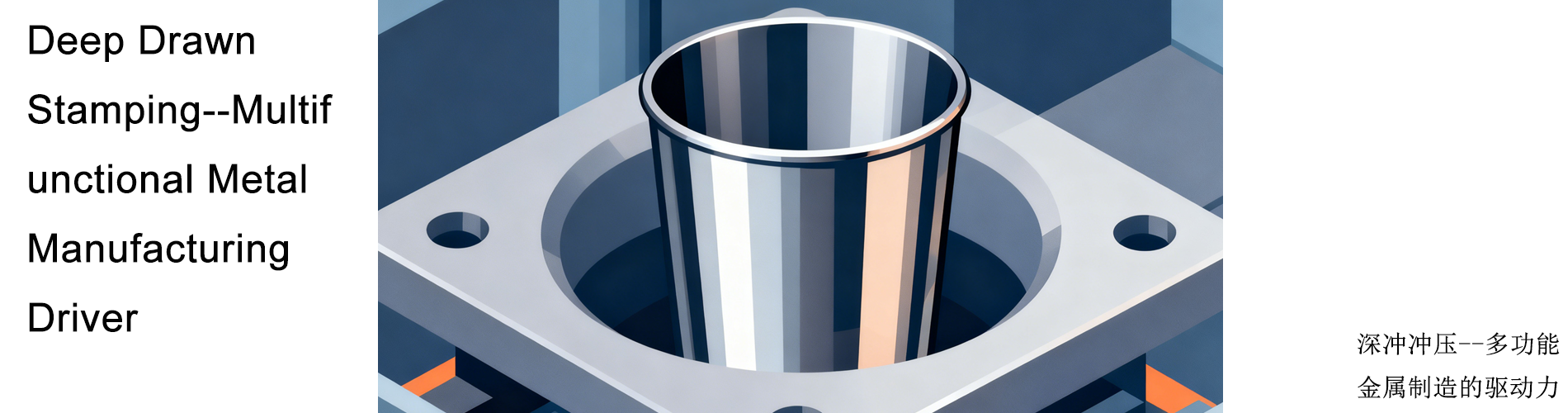
Deep Drawn Stamping--Multifunctional Metal Manufacturing Driver
designing an enclosure